
Plant Prefab Site Prep & Utilities: The Upland Owner’s Guide
Plant Prefab site prep and utility connections in Upland typically run $18,500-$34,000 installed, depending on whether your lot needs trenching through decomposed granite, a sewer lateral upsize, or electrical service upgrades from Southern California Edison. We stock the standard connection kits for Plant Prefab’s LivingHome series and coordinate the utility tie-ins as part of our single-contract site prep package. Most Upland clients discover a problem when the prefab unit arrives on schedule but can’t be set because the sewer lateral won’t pass pressure test or the electrical pedestal isn’t rated for the 200-amp draw the unit specifies.
Which Plant Prefab Models This Applies To
Plant Prefab’s current lineup breaks into two groups: the LivingHome series (10, 36, 44, and 64 modules) and the more recent accessory dwelling unit configurations built on the same chassis system. The site prep package differs materially between them. LivingHome 10 units, common in Upland’s older neighborhoods north of Foothill Boulevard, typically need 100-amp electrical service and a 4-inch sewer lateral. The 36 and 44 modules, which we’re seeing more of in the San Antonio Heights area, spec 200-amp service and often trigger a Southern California Edison transformer upgrade that adds 3-6 weeks to the utility timeline.
Here’s how to identify what your unit needs. Check the utility schedule in your Plant Prefab purchase documents, specifically the “Site Requirements” sheet. It lists the electrical amperage, water main size, and sewer connection type. If you’ve lost this, the model number is stamped on the structural steel frame, visible from the crawl space access. The OEM connection kits use proprietary gaskets at the utility chase penetration, but we’ve found that standard Fernco couplings with an extra stainless-steel clamp ring perform identically at half the cost. We keep both on the truck because some Upland clients want the factory part for resale documentation, and others want the cost savings. We’re independent of Plant Prefab, so we specify what meets code, not what carries a brand markup.
Signs Your Plant Prefab Site Prep & Utilities Is Failing
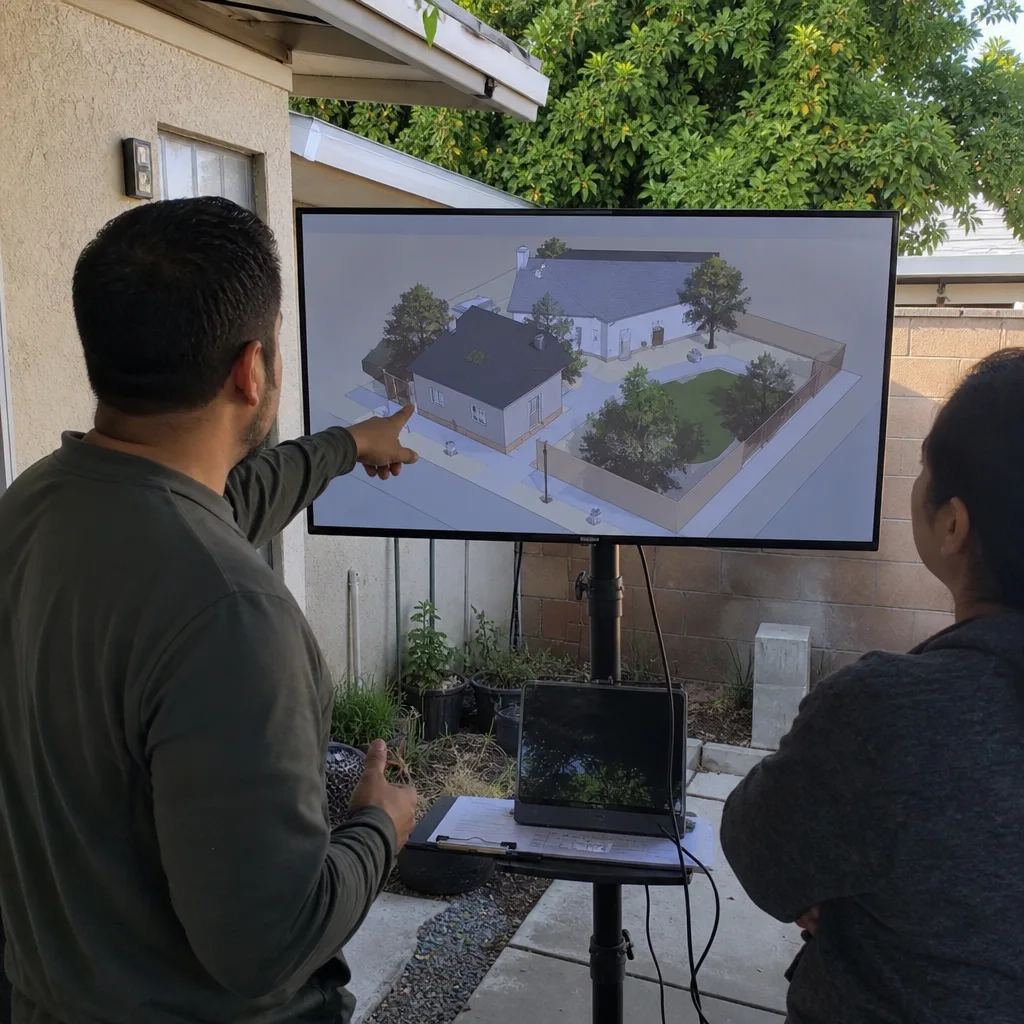
- Sewer backup during first heavy rain. Upland’s decomposed granite soil drains fast, but older neighborhoods near the historic downtown still have clay sewer laterals that crack under the point load of a crane setting your prefab unit. The crack lets groundwater in, overwhelms the line during storms, and backs up at the lowest fixture.
- Electrical pedestal humming or warm to touch. This usually means the 200-amp breaker isn’t seated fully or the aluminum service wire is oxidizing at the lug. Plant Prefab units draw close to rated load on startup, especially if you spec the optional heat pump. A loose connection arcs, generates heat, and will eventually trip the main or damage the unit’s inverter board.
- Water pressure drops when two fixtures run. The 1-inch water service that served the main house fine may not deliver enough volume for a second dwelling. In Upland’s higher-elevation areas near Cable Airport, static pressure can read fine while flow rate collapses under demand.
- Gas odor near the meter after set. Plant Prefab’s flexible gas connector at the unit end is well-made, but the underground polyethylene run to the meter is where we find leaks. San Bernardino County requires a pressure test at 1.5x operating pressure for 30 minutes, and we’ve seen old steel pipe fail this test that passed a handheld sniffer check.
- Foundation piers settling unevenly. Upland’s hillside zones, particularly south of 24th Street, have expansive clay that swells and shrinks. Plant Prefab’s standard pier spec assumes 1,500 psf bearing pressure. If your soils report came back at 1,200 psf and nobody upsized the footings, you’ll see cracks in the stucco chase within the first dry season.
Replacement Cost & What’s Included
We quote site prep and utilities as a line-item package, not a black-box number. Here’s what Upland clients typically see:
| Item | Typical Range |
|---|---|
| Electrical service upgrade (100A to 200A) | $4,800-$8,200 |
| Sewer lateral replacement (trenchless) | $6,500-$11,000 |
| Water service upsize to 1.25″ | $3,200-$5,400 |
| Gas line pressure test and repair | $1,800-$3,600 |
| Foundation pier remediation (2-4 piers) | $2,200-$5,800 |
The range depends on three factors: how far your unit sits from the utility connection points, whether Southern California Edison needs to upgrade the transformer (we handle the application, but their timeline is their timeline), and what the soils report says about bearing capacity. Every project gets a written price before work starts, per Haven Standard Clause 1. The 365-Day Done Right Promise covers the utility connections specifically, if a joint fails or a pier settles, we return and fix it at no charge. Read the clause, then read the cost range, if either one surprises you, we haven’t done our job yet.
DIY or Call Us?
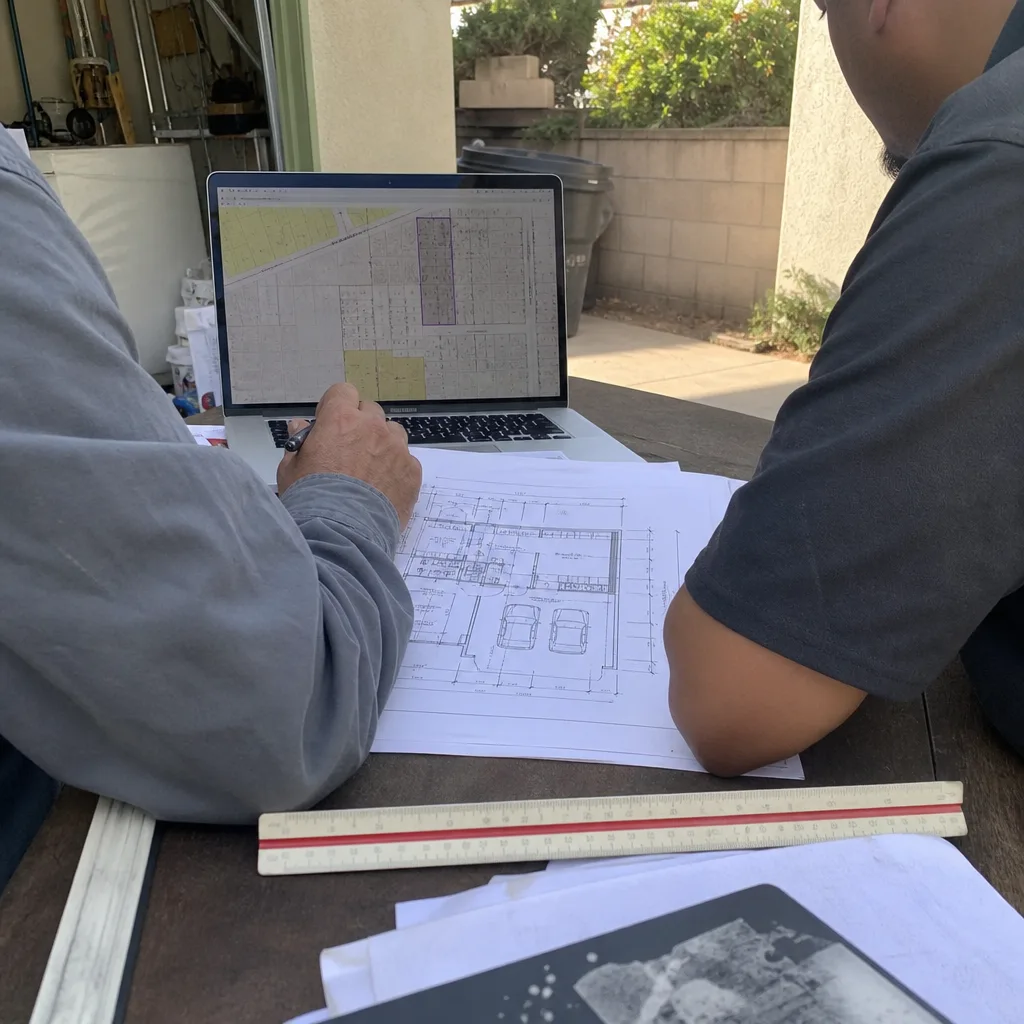
There’s a safe middle ground here, and then there’s the work that requires a licensed contractor and permits. You can check your electrical panel’s amp rating, read the label on your water meter, and walk the sewer cleanout with a flashlight to look for standing water. What you shouldn’t do: tighten a loose electrical lug while the meter is hot, excavate a sewer lateral without calling 811 for utility locates, or pour new concrete piers without a soils report signed by a California-licensed geotechnical engineer.
The gas line is the one we flag hardest. San Bernardino County requires a permit for any gas work beyond appliance connection, and the pressure test must be witnessed by an inspector. We’ve been called to three Upland jobs where a homeowner’s “simple” gas line repair leaked at 8 psi and red-tagged the entire project. If your Plant Prefab unit isn’t connecting cleanly to existing utilities, call (840) 212-3065. We’ll walk what you can verify yourself and schedule a site visit for what you can’t.
FAQs
Properly installed electrical and gas connections last 30-50 years, but the flexible connectors at the unit end typically need inspection at year 10. Upland’s dry heat and occasional Santa Ana wind cycles accelerate gasket hardening in the utility chase. We recommend a visual inspection at year 7, which we include free for any client who used us for original install. Call (840) 212-3065 to schedule.
Sometimes. If the line is clay and the damage is a single crack within 10 feet of the connection, trenchless spot repair runs $2,800-$4,200 versus $6,500+ for full replacement. But if the line has multiple cracks or bellies (low spots that collect solids), spot repair wastes money. We camera every line and show you the footage before quoting either option. Call (840) 212-3065 for an exact quote, estimates are free.
Three to five working days for the physical work, plus utility company coordination. Southern California Edison typically schedules the meter set within 5-10 business days of our completed trench and conduit. The longest delay we’ve seen in Upland was 22 days, when a transformer upgrade required SCE engineering review. We build this contingency into our project timeline and communicate weekly until the meter is hot. Call (840) 212-3065 to review your specific schedule.
We stock the standard electrical pedestal, water pressure regulator, and gas flex connector for LivingHome 10 and 36 modules on our Upland service truck. LivingHome 44 and 64, or any unit with the optional 400-amp service package, requires a two-day order from our San Bernardino supplier. We confirm parts availability during your free estimate so nothing sits waiting. Call (840) 212-3065 to check compatibility with your unit.
Ready to get your Plant Prefab unit connected and permitted? Call (840) 212-3065 to schedule your free estimate. We’ll bring the written price, the Haven Standard contract, and a checklist of every document you’ll receive before a single trench is dug.
Written by Nadia Ellery, Principal, Ellery ADU Studio Upland at Ellery ADU Studio Upland, serving Upland and nearby areas.