
Last updated September 25, 2026
ADU Warning Signs: A Upland Homeowner’s Reference Guide
Upland’s assessor records show a significant number of parcels carrying a second dwelling unit with no matching building permit history. These structures were often occupied for years before the owner discovered the city could require demolition, retroactive permitting at current code, or both. This guide is written for the homeowner who just inherited a property, closed on a house with a “bonus unit,” or suspects their existing garage conversion was never properly permitted, and is part of our more guides & resources for Upland homeowners. You’ll learn how to pull Upland permit records, read the physical warning signs of substandard work, and spot documentation gaps before they become five-figure problems.
Quick Answer
An unpermitted or defectively built ADU in Upland typically shows warning signs in three categories: documentation gaps (missing permits, mismatched assessor records), physical defects (improper electrical grounding, slab cracking from expansive clay, unlabeled panels), and contractor red flags (bids excluding permit fees, proposals to “handle permits later”). If you suspect any of these, pull the parcel’s permit history through Upland’s Building Division before spending money on cosmetic improvements.
Table of Contents
- How to Pull Upland Permit Records and Read What They Tell You
- Five Electrical Warning Signs in Converted Garages and Second Units
- Structural Warning Signs in Upland’s Expansive Clay Soil
- Contractor Red Flags During the Hiring Process
- Documentation Warning Signs in Design-Build and Design-Bid-Build Contracts
- Prefab and Modular ADU Warning Signs
- Common Mistakes to Avoid
- When to Call a Professional
- Frequently Asked Questions
How to Pull Upland Permit Records and Read What They Tell You
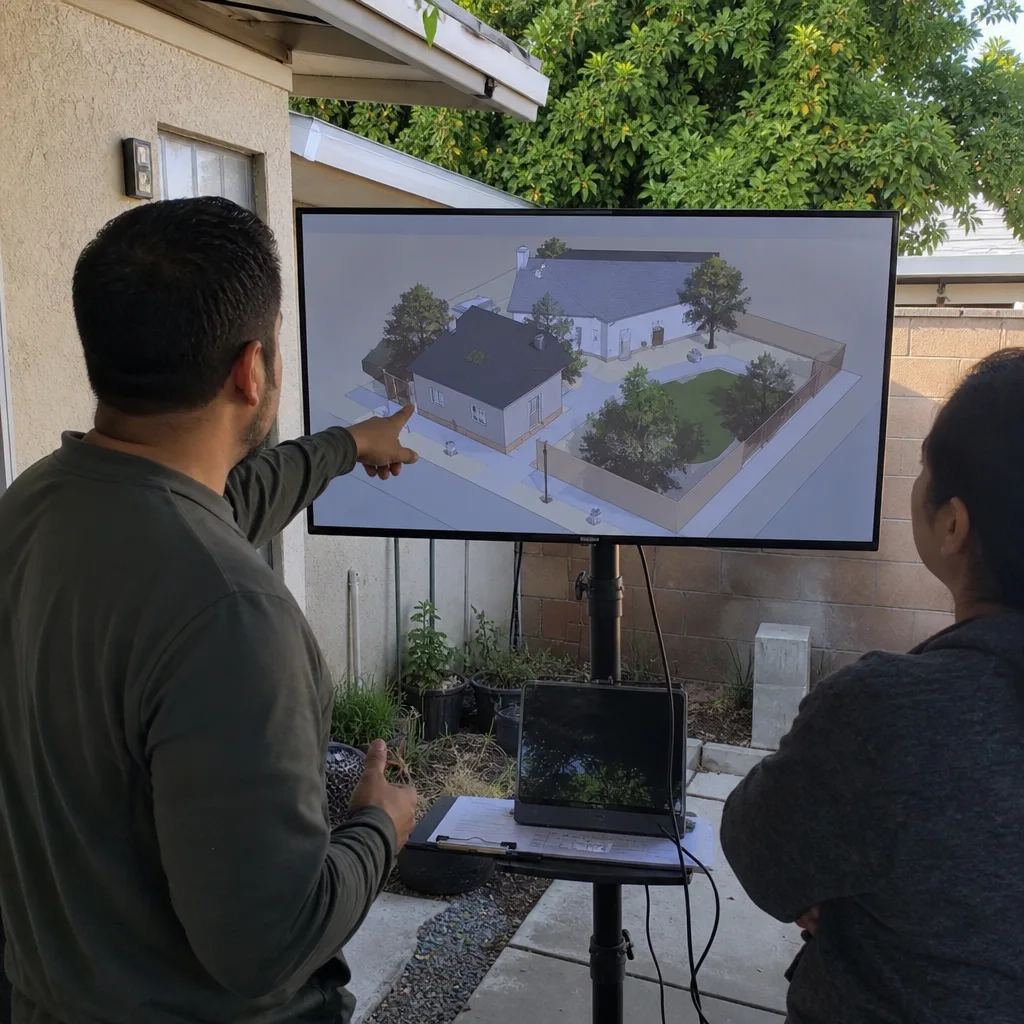
The first step in assessing any existing ADU in Upland is determining whether it was legally permitted. This is not a matter of asking the previous owner. We’ve seen sellers who genuinely believed their garage conversion was “grandfathered in” because it existed before they bought the property, only to learn the structure had never been through Upland’s Building Division.
Upland maintains permit records through the Building Division at City Hall. Here’s how to pull them:
- Visit in person or call Upland Building Division with your parcel number (APN). The APN appears on your property tax bill and on San Bernardino County assessor records. Staff can print the full permit history tied to that parcel.
- Request a “permit history report” specifically. This is different from a simple yes/no check. You want the document that lists every permit number, type, issue date, final inspection date, and status.
- Cross-reference against the assessor’s “improvements” value. San Bernardino County assessor records show a dollar value for structures on the parcel. If that value jumped significantly in a year with no corresponding building permit, you likely have unpermitted square footage.
- Look for a Certificate of Occupancy or final inspection sign-off on any ADU or conversion permit. A permit that was issued but never finaled is functionally the same as no permit at all. Upland can still require removal or retroactive compliance.
The gap between assessor value and permit history is one of the most reliable warning signs we encounter. In 2019, we reviewed a property in Upland’s San Antonio Heights area where the assessor showed $187,000 in improvements added in 2014, but the permit history contained only a $3,200 roofing permit. The “guest house” in the backyard had never been through plan check. The new owner faced a choice: demolish a $200,000 structure, or bring it to current code at roughly $45,000 in structural, electrical, and energy-compliance upgrades.
Also check for permit type mismatches. A “repair” or “maintenance” permit that resulted in a kitchen, bathroom, and separate entrance is a red flag. Upland’s code enforcement staff have seen this pattern repeatedly: a contractor pulls a minor permit to avoid plan check, then builds a full dwelling unit.
If you’re considering adding an ADU properly from the start, ADU Design & Permitting in Upland covers how a permitted project moves through Upland’s system from initial survey to final inspection.
Five Electrical Warning Signs in Converted Garages and Second Units
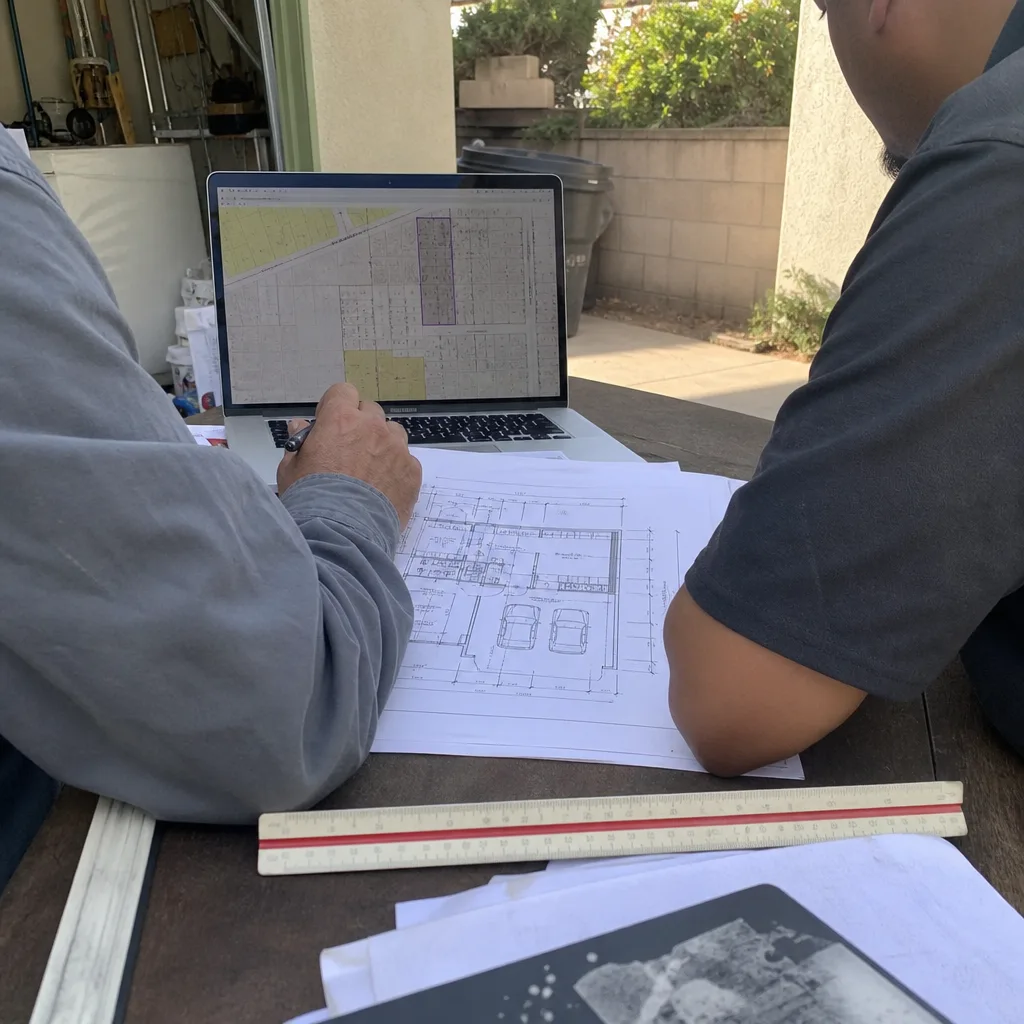
Unpermitted electrical work in ADUs is common, dangerous, and expensive to remediate. California’s Title 24 energy code and the National Electrical Code (NEC) apply fully to ADUs, including garage conversions. In Upland, which sits within Southern California Edison’s service territory, the utility also has specific requirements for new or upgraded service to a second unit.
Here are the five physical warning signs we look for first:
- Panel labeling that doesn’t match the breakers inside. Open the main panel and any subpanel. The directory should list every circuit and its load. Handwritten labels that say “guest house” or “back room” without circuit numbers, or a directory that doesn’t match the breaker positions, suggest amateur work. In one Upland review last year, the panel directory showed 20 circuits but the panel only had 16 breaker positions. The previous owner had tapped into existing circuits without proper load calculation.
- Conductor sizing that doesn’t match the breaker rating. A 30-amp breaker must have at least 10-gauge copper wire. A 20-amp breaker needs 12-gauge minimum. We’ve found 14-gauge wire (standard for 15-amp lighting circuits) on 20- and 30-amp breakers in converted garages throughout Upland’s older neighborhoods. This is a fire hazard. The wire overheats before the breaker trips.
- Missing or improper grounding. Every subpanel in a detached structure must have its own ground rod and the grounding conductor must be properly bonded. In garage conversions attached to the main house, the grounding path must be continuous. We look for bootleg grounds (neutral and ground connected at the subpanel), missing ground rods on detached units, and receptacles that show “open ground” on a tester. Upland’s inspectors will fail any of these on final inspection.
- GFCI placement that ignores current code. As of recent NEC adoptions, GFCI protection is required in all garage outlets, all kitchen outlets, all bathroom outlets, laundry areas, and exterior locations. In ADUs, this also means the water heater and HVAC equipment if within six feet of a sink or laundry fixture. We regularly find garage conversions in Upland with original garage outlets that never received GFCI upgrades.
- Subpanel feed without proper disconnect. A subpanel feeding an ADU must have a disconnecting means within sight of the structure, or the main panel must be capable of serving as that disconnect. We’ve found subpanels fed by unfused conductors running through attics and crawl spaces, with no disconnect at the ADU end. This is both a code violation and a safety issue for emergency responders.
Safety note: Do not open electrical panels or test circuits yourself if you are not trained. The components inside can kill you even with the main breaker off. If you observe any of these warning signs, have a licensed electrician perform a full inspection and provide a written report. At Ellery ADU Studio Upland, our electrical scope includes this inspection as standard on every existing-structure review.
Structural Warning Signs in Upland’s Expansive Clay Soil
Upland sits on the edge of the Pomona Valley, where soils contain significant expansive clay content. This clay swells when wet and shrinks when dry, exerting tremendous pressure on foundations. An ADU built without proper geotechnical consideration, or an older structure that predates current understanding of these soils, will show specific patterns of distress.
Here’s what we look for:
Slab edge deterioration. In garage conversions especially, the existing slab was often poured as non-occupiable space. It may be 3.5 to 4 inches thick, without a vapor barrier or proper compaction beneath. Where expansive clay has pushed upward, the slab edge crumbles and spalls. Look for a ragged, flaking edge where the slab meets the soil, often with a gap opening beneath. In Upland’s climate, with wet winters and dry summers, this cycle accelerates.
Foundation crack orientation. Not all cracks mean foundation failure. Shrinkage cracks in concrete are common, typically hairline, running in random directions, and stable over time. Settlement cracks from expansive clay are different: they tend to be wider at one end, often diagonal across corners, and they open and close seasonally. A crack that was “fixed” with epoxy but has reopened is nearly always active settlement, not shrinkage.
Wall-floor separation. In a converted garage, look where the framed walls meet the slab. If the wall base has pulled away, creating a visible gap, the slab may be heaving or settling unevenly. This is common in Upland’s North Upland and Upland Hills areas where cut-and-fill grading for hillside homes left variable soil conditions.
Door and window operation changes. Doors that stick in summer but swing free in winter are responding to slab movement. Windows with cracked glass or separated frames may indicate racking of the wall structure above a moving foundation.
Roof line irregularity. Step back from the structure and sight along the roof edge. A sagging or wavy roof line in a converted garage often means the original structure was never designed for the additional load of insulation, drywall, and mechanical equipment now installed inside.
Structural remediation in expansive clay is not a handyman job. It requires a geotechnical engineer’s report, a structural engineer’s repair design, and a contractor who can execute without further disturbing the soil moisture balance. At Ellery ADU Studio Upland home, we coordinate this entire chain under our single contract, with a written price before work starts per Haven Standard, Clause 1.
Contractor Red Flags During the Hiring Process
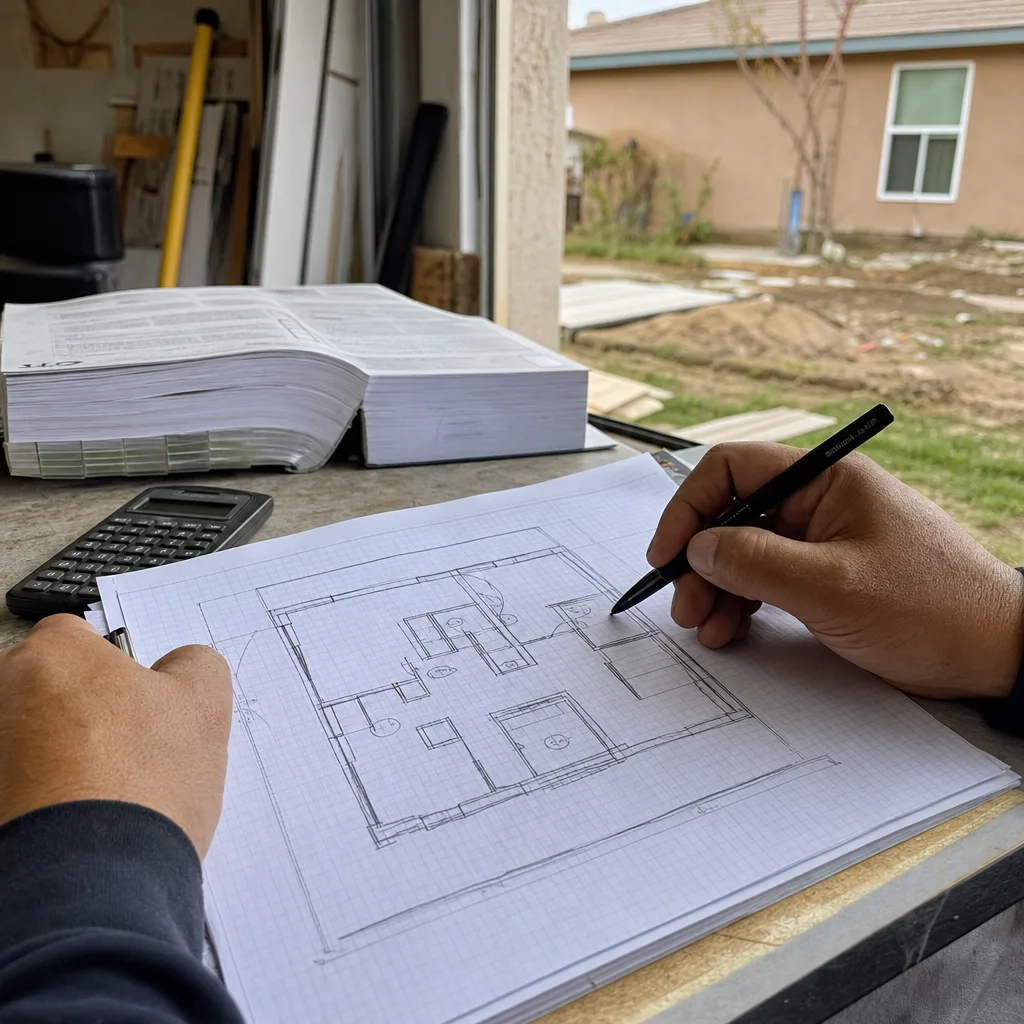
Whether you’re remediating an existing unpermitted ADU or building new, the contractor selection process is where most homeowners accumulate future problems - a topic covered in depth in our How to Hire a ADU Contractor in Upland: A Step-by-Step Guide. Upland’s ADU market has attracted operators who understand the homeowner’s urgency - aging parents arriving, rental income needed - and exploit it with proposals that shift all risk to the owner.
Here are the specific red flags we warn clients to treat as automatic disqualifiers:
- The bid excludes permit fees. Upland’s Building Division publishes its fee schedule. A contractor who won’t include those costs in writing is either planning to skip permits or planning to bill you later at a markup. Either way, you have no fixed price. Under Haven Standard, Clause 1, every project we quote includes all permit fees, plan check costs, and inspection fees in the written price.
- The proposal suggests “handling permits later” or “getting started while permits process.” This is illegal in California for most construction work and voids your homeowner’s insurance if something goes wrong. Upland’s code enforcement actively investigates complaints and can issue stop-work orders that freeze your project for months.
- The CSLB license number doesn’t match the entity signing the contract. Verify every license at cslb.ca.gov. Check that the name on the license matches the name on the proposal and the name on the contract. We’ve seen operators in the Inland Empire use a valid license number on marketing materials but sign contracts through a different, unlicensed entity. The CSLB complaint process offers no recovery if you signed with the wrong company.
- No proof of workers’ compensation insurance. If a worker is injured on your property and the contractor lacks coverage, your homeowner’s policy may be primary. Request a certificate of insurance directly from the carrier, not from the contractor.
- Pressure to decide quickly. “I have a crew opening next week” or “material prices are going up Friday” are urgency tactics, not business facts. A legitimate design-build studio maintains scheduling visibility months ahead and prices from current vendor agreements.
We also recommend checking how long the contractor has worked specifically in Upland. San Bernardino County’s ADU ordinance has nuances that differ from Los Angeles County and Riverside County. A contractor who “does ADUs all over Southern California” may not know Upland’s specific setback requirements, parking replacement rules, or fire separation standards for attached units, as we explore in DIY vs Professional ADU: The Upland Homeowner’s Decision Guide.
For homeowners starting fresh, New Detached ADU in Upland details how our design-build process eliminates the designer-versus-builder blame gap from day one.
Documentation Warning Signs in Design-Build and Design-Bid-Build Contracts
The contract itself is a warning sign system. Gaps in documentation predict gaps in execution. We’ve reviewed contracts from other firms that ran 40 pages of protective language for the contractor and three paragraphs of vague scope description for the homeowner. Here’s what to demand in writing:
Fixed price for the permit set, separate from construction. In a design-bid-build model, the architect and contractor are separate entities. The homeowner often receives a design fee proposal with no construction pricing, then discovers the buildable design exceeds budget. In design-build, the permit set and construction should be a single written price, but some firms still separate them loosely, allowing construction “allowances” to balloon. Under Haven Standard, Clause 1, the written price covers both: the permit set is the core product, not an afterthought, and the construction price is fixed at signing.
Defined change-order process with pricing methodology. Every contract should state how changes are priced (cost-plus a stated markup, or pre-negotiated unit prices) and who can authorize them. Vague language like “changes will be handled fairly” means nothing when you’re six months in and the contractor wants $8,000 for a window relocation that should have been caught in design.
Lien waiver language. California law protects homeowners from mechanic’s liens through a structured waiver process, but only if the contract references it. A contract without lien waiver requirements leaves you exposed to supplier or subcontractor claims even if you paid the general contractor in full. We include lien waiver documentation at every progress payment, with copies to the homeowner before the next draw.
Defined deliverables at each phase. The contract should list what you receive and when: survey, conceptual drawings, permit set, approved permits, pre-construction meeting notes, weekly photo logs, final inspection documentation, Certificate of Occupancy. Without this list, you’re buying a process, not a product.
Warranty terms in writing, not “industry standard.” The 365-Day Done Right Promise at Ellery ADU Studio Upland states specifically: if the finished ADU is not built to the permitted drawings, we make it right. The scope of “right” is defined by the approved permit set, not by subjective satisfaction. This is in writing before the project starts, not discussed informally at the closing dinner.
Prefab and Modular ADU Warning Signs
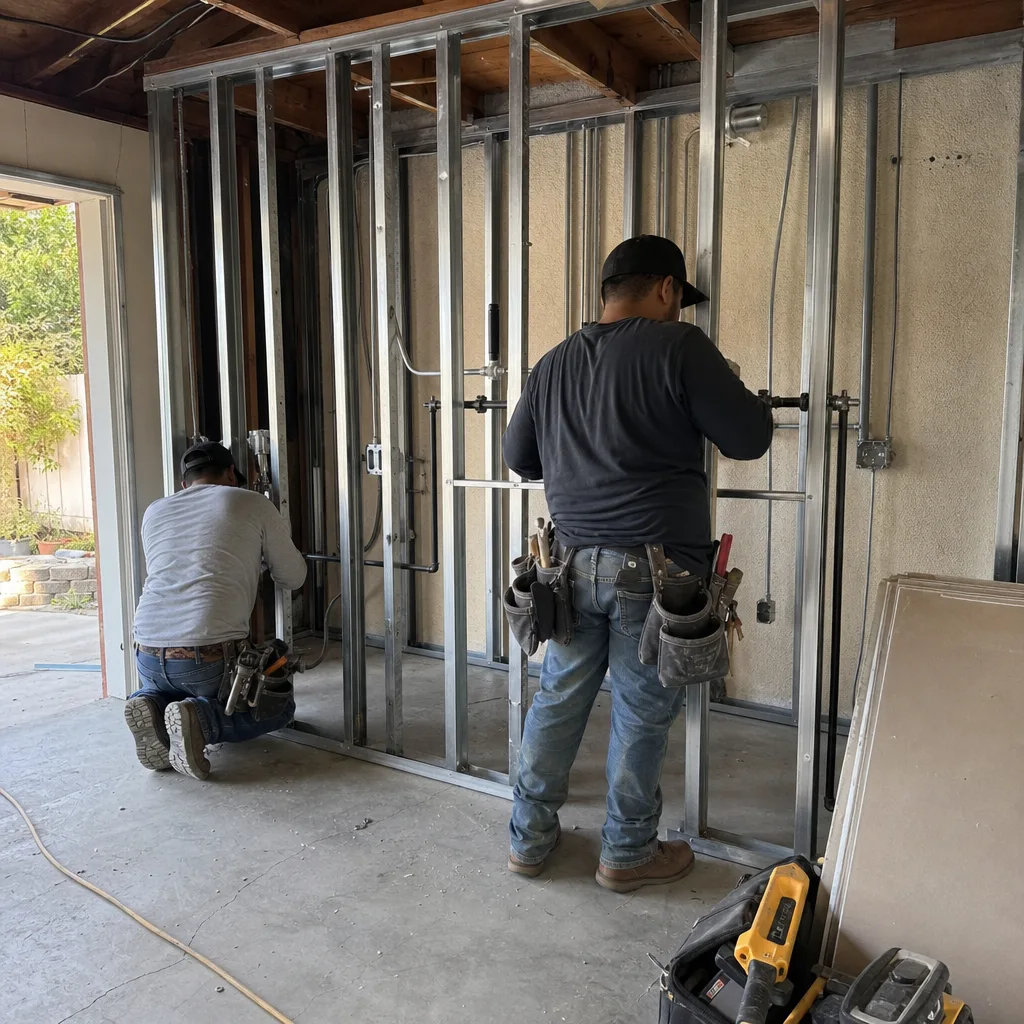
Prefab and modular ADUs have gained significant traction in Upland, particularly for homeowners who want to minimize site disruption or need faster delivery. Brands like Mighty Buildings, Boxabl, Plant Prefab, and Tuff Shed offer systems that can work well in the right conditions. But prefab introduces its own warning signs, distinct from stick-built construction.
Foundation mismatch. Every prefab unit requires a foundation designed for its specific load points and connection details. We’ve seen homeowners purchase a unit from a manufacturer, then hire a local contractor to pour a generic slab that doesn’t match the anchorage pattern. The unit arrives and cannot be properly secured. The fix is a new foundation, often $15,000-$25,000 in Upland’s soil conditions. The foundation design must come from the manufacturer or a structural engineer licensed in California, and it must be submitted with the permit set.
Transportation damage concealed by finish. Modular units travel on highways. Interior finishes can crack, plumbing can shift, and weather seals can compress. Inspect the unit before interior finishes are closed in, or require a documented photo record of the unit’s condition at delivery. At Ellery ADU Studio Upland, we provide this documentation on every prefab project, matching the manufacturer’s delivery photos against our own post-set inspection.
Utility connection assumptions. Prefab manufacturers often assume standard utility locations and capacities. Upland’s older neighborhoods may have sewer laterals at 4-inch depth in clay pipe, not the 6-inch PVC the manufacturer expects. Electrical service may be overhead, requiring a different meter location than the side-wall configuration in the manufacturer’s standard drawings. These mismatches are solvable, but only if identified during design, not discovered when the unit is set and the plumber can’t make the connection.
Manufacturer warranty versus installation warranty. The unit’s structural warranty covers defects in manufacturing. It does not cover improper installation, foundation failure, or utility connection errors. Your contract with the installer must separately cover workmanship. Our single contract at Ellery ADU Studio Upland covers both: we coordinate the manufacturer’s warranty registration and back our own installation with the 365-Day Done Right Promise.
Garage conversions remain the most common ADU type in Upland, and Garage Conversion ADU in Upland explains how we handle the specific challenges of converting existing structures that may carry hidden conditions.
Common Mistakes to Avoid
- Assuming a long-occupied ADU is “grandfathered.” California’s ADU laws do not grandfather unpermitted structures. Upland can require full compliance with current code for any unit discovered without permits, including energy standards that didn’t exist when the structure was built. The cost of bringing a 1980s garage conversion to 2024 Title 24 often exceeds new construction.
- Starting cosmetic improvements before verifying permits. We’ve met homeowners who spent $30,000 on kitchen and bathroom finishes in a “guest house,” then learned it was unpermitted and had to be stripped to the studs for inspection access. Verify first, improve second.
- Accepting a contractor’s verbal assurance that permits “aren’t needed for this.” In Upland, almost every ADU-related project requires permits: structural modifications, electrical upgrades, plumbing additions, and occupancy changes all trigger Building Division review. The contractor who says otherwise is either ignorant or dishonest. Either is expensive.
- Ignoring soil conditions when evaluating an existing slab. Upland’s expansive clay doesn’t forgive shortcuts. A slab that looks fine in October may show 2 inches of heave by March. Have a structural engineer evaluate any existing slab before committing to a conversion budget.
- Signing a contract without reading the change-order clause. The change-order clause is where projects go off the rails. Read it. Understand the markup percentage, the authorization process, and whether the contractor can proceed without your signed approval in “emergency” conditions.
- Failing to document the existing condition. Before any work begins, photograph everything: the electrical panel interior, the slab surface, the roof structure, the exterior grade against the foundation. These photos are your evidence if disputes arise about pre-existing versus contractor-caused conditions.
When to Call a Professional
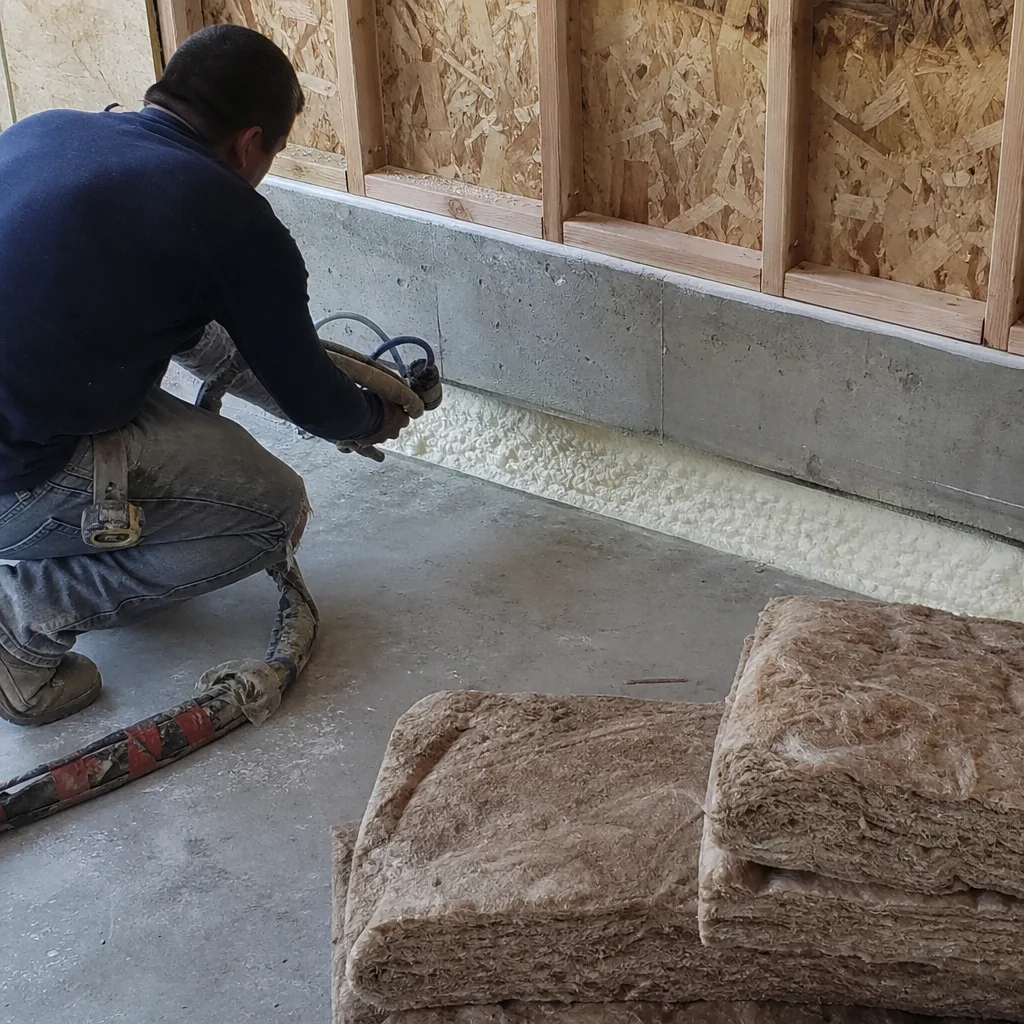
Call a licensed professional when you discover any permit gap in your parcel history, any electrical condition you cannot verify as code-compliant, any structural crack that changes seasonally, or any contract that lacks fixed pricing and defined deliverables. These are not DIY assessment situations. The cost of professional evaluation is typically $500-$1,500; the cost of discovering a problem after you’ve invested in improvements is often 10 to 50 times that.
Ellery ADU Studio Upland offers free estimates in Upland, including existing-structure reviews, permit history analysis, and second opinions on written estimates already in hand. Call (840) 212-3065 to schedule. A live person answers calls 24/7.
Frequently Asked Questions
Retroactive permitting of an unpermitted ADU in Upland typically costs $35,000-$85,000, depending on how far the existing structure departs from current code. Electrical and structural upgrades consume the largest share, followed by energy compliance (insulation, HVAC efficiency, windows). This assumes the structure can be brought to code at all; some unpermitted ADUs require partial demolition and rebuild. Call (840) 212-3065 for a specific assessment - estimates are free, and we provide a written price before any work starts per Haven Standard, Clause 1.
Yes. Upland’s code enforcement division can issue orders to abate unpermitted structures, including demolition, if the structure cannot be brought into compliance with current building, fire, and zoning codes. This risk increases if the structure is reported by a neighbor, discovered during a separate permit application, or flagged during a property sale. The most common trigger we see is a homeowner applying for a pool permit or main-house addition, which prompts a site inspection that reveals the unpermitted unit.
This gap strongly suggests unpermitted construction. San Bernardino County assessors update property values based on visible improvements, not permit records. A jump in improvements value without a matching permit means someone built something the Building Division never reviewed. The assessor’s record is not evidence of permit compliance; only the Building Division’s permit history is. Pull both, compare the dates, and investigate any discrepancy.
Standard homeowner’s policies typically exclude coverage for unpermitted structures and may deny claims related to them. If a fire starts in unpermitted electrical work, the insurer may refuse the entire claim, not just the ADU portion. Some insurers will cancel the policy entirely if an unpermitted dwelling unit is discovered. Verify your coverage with your carrier before relying on it.
Visit cslb.ca.gov and use the “Instant License Check” feature. Enter the license number and verify three things: the license status is “Active,” the classification includes the work being performed (B-General Building for ADUs), and the business name matches the entity signing your contract. Also verify workers’ compensation insurance by requesting a certificate directly from the insurance carrier, not from the contractor.
Prefab (panelized or kit-built) and modular (volumetric, factory-built units) both require Upland Building Division permits, but modular units also require California Department of Housing and Community Development (HCD) factory inspection and certification. The local permit process is similar for both, but modular units arrive with HCD labels that must be verified. Foundation design, utility connections, and crane access for setting the unit are additional considerations that don’t apply to site-built construction. At Ellery ADU Studio Upland, we coordinate HCD certification, local permitting, and site work under our single contract for prefab and modular projects.
The Bottom Line
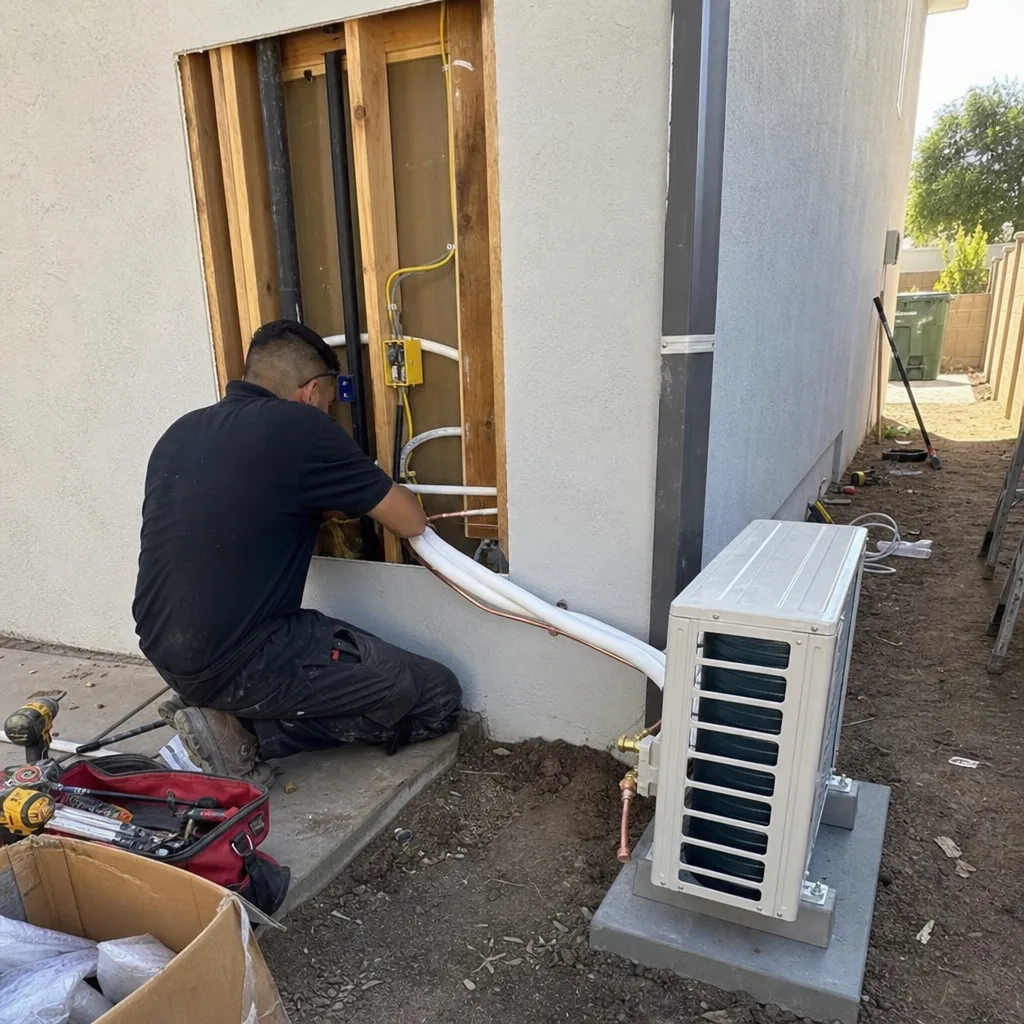
ADU warning signs in Upland fall into three categories: documentation gaps that show up in permit histories and assessor records, physical defects in electrical and structural systems, and contractor proposals that shift risk to the homeowner through vague pricing, missing permits, and incomplete contracts. The homeowner who verifies before improving, who reads contracts before signing, and who treats unpermitted square footage as a liability rather than a bonus, avoids the five-figure surprises that derail most ADU projects. The cost of due diligence is modest. The cost of skipping it is not.
Written by Nadia Ellery, Owner at Ellery ADU Studio Upland, serving Upland since 2015.